
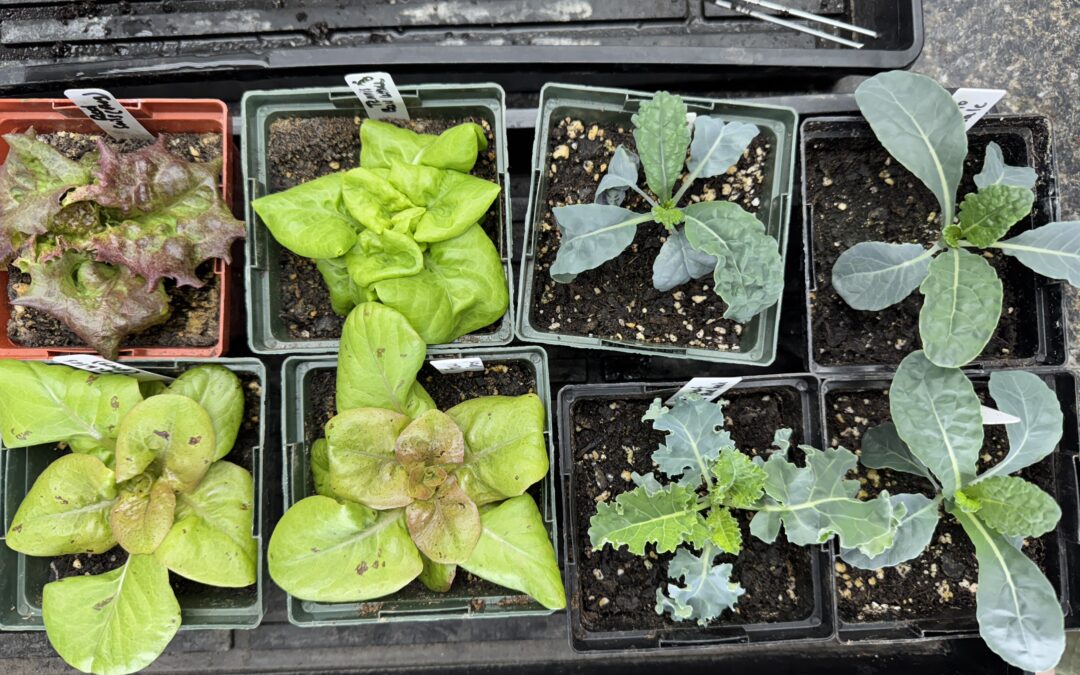
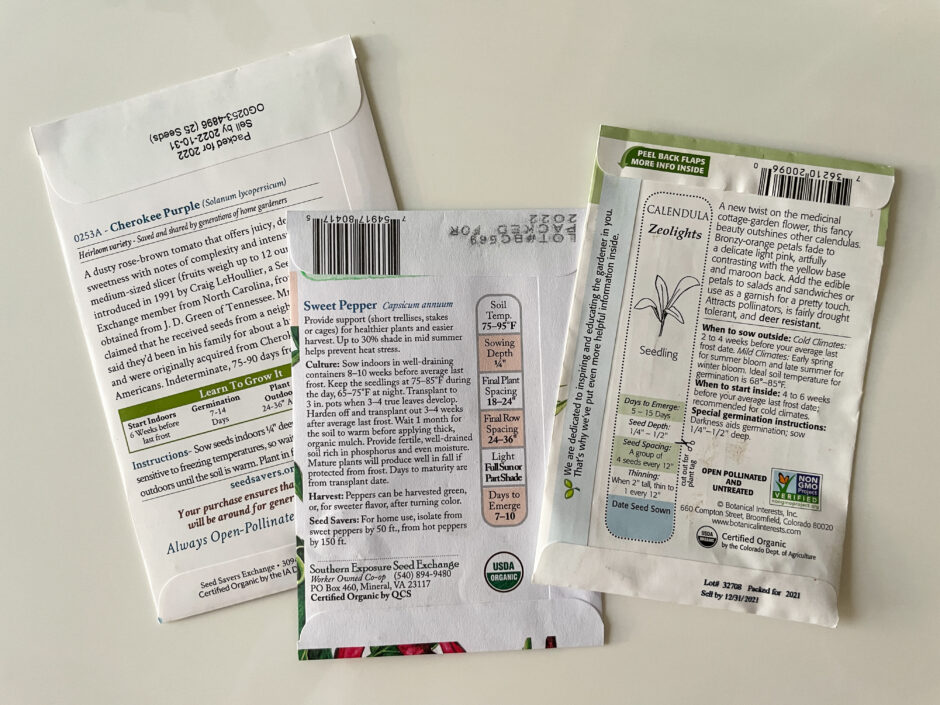
You bought seeds with good intentions, but now you aren’t sure when to plant all of those seeds. You’re staring at the back of a seed packet that says “start indoors 6-8 weeks before last frost” and thinking: okay, but when is that?
That’s what I’m here to help with.
It all hangs off your last frost date
There’s no universal seed calendar. “Plant tomatoes in March” is useless, because March in Virginia and March in Minnesota aren’t the same season. Every timing instruction on every packet is written as weeks before or after your average last spring frost, which is the date your area usually stops getting freezes cold enough to kill a tender plant.
Step one isn’t planting anything. It’s finding that date.
It takes about thirty seconds. Look up your zip code on the Almanac frost date tool, and you’ll get something like “last frost: around April 25.” That’s your zero point. Every other date counts backward and forward from it.
Write it down somewhere you’ll see it, because you’re going to use it for everything you plant.
When to plant seeds, counting from your frost date
Once you have your date, here’s roughly when the most-asked-about seeds go in. “Before” means weeks before your last frost. “After” means weeks past it. Find your plant and count from your own date.
| Plant | When | Indoors or direct sow |
|---|---|---|
| Arugula | 7 weeks before | Direct sow |
| Basil and most herbs | 8 weeks before | Start indoors |
| Beans (pole and bush) | On your frost date | Direct sow |
| Broccoli | 9 weeks before | Start indoors |
| Cabbage | 7 weeks before | Start indoors |
| Calendula | 6 weeks before | Start indoors |
| Cantaloupe | 4 weeks before | Start indoors |
| Carrots | 7 weeks before | Direct sow |
| Collards | 12 weeks before | Start indoors |
| Cosmos | 6 weeks before | Start indoors |
| Cucumbers | 4 weeks before | Start indoors |
| Eggplant | 10 weeks before | Start indoors |
| Kale | 12 weeks before | Start indoors |
| Lettuce | 9 weeks before | Start indoors |
| Marigolds | 6 weeks before | Start indoors |
| Parsnips | 7 weeks before | Direct sow |
| Peas | 6 weeks before | Direct sow |
| Peppers | 8 weeks before | Start indoors |
| Pumpkins | 4 to 8 weeks after | Direct sow |
| Radishes | 7 weeks before | Direct sow |
| Spinach | 6 weeks before | Direct sow |
| Squash (summer) | 4 weeks before | Start indoors |
| Sunflowers | On your frost date | Direct sow |
| Swiss chard | 12 weeks before | Start indoors |
| Tomatoes | 8 weeks before | Start indoors |
| Watermelon | 4 weeks before | Start indoors |
| Winter squash | 4 to 8 weeks after | Direct sow |
| Zinnias | 6 weeks before | Start indoors |
A note on garlic and fall bulbs: You won’t find garlic, tulips, or ranunculus in the table above, because they don’t play by the same rules. Everything in the chart counts from your last spring frost. But garlic and fall-planted bulbs go in the fall, a few weeks before your ground freezes for winter, which keys off your first fall frost instead. For me here in Zone 7A, that’s October into November. Colder zones plant earlier, warmer zones later. So I left them out of the chart rather than pretend one month fits everyone.
A few that surprise people
Pumpkins feel like a spring thing, but they go in after your frost date, not before. They want warm soil. Plant them too early and they sulk.
Sunflowers and beans are happiest sown straight into the ground right around your frost date. No need to start them indoors. They grow so fast it isn’t worth the tray space.
The cold-hardy crops (kale, broccoli, peas) go out earlier than feels reasonable, because a light frost doesn’t bother them. Kale can take a hard freeze.
The part that actually trips everyone up
That table is organized by plant. But that’s not how the work happens.
You don’t start your seeds one plant at a time. You sit down on some random week in late winter and you need to know: this week, what do I start? Some weeks you’re starting four things indoors, direct sowing two more and hardening off a tray that’s been under lights for a month.
Reading the timing plant by plant is exactly what makes people give up in February. I know, because that was me years ago. 37 packets, 37 different “weeks before frost” numbers, and some tomatoes saying 7 weeks, some saying 8. Nope. All the tomatoes are getting planted on the same day.
So I flipped it around.
A week-by-week seed starting countdown you can print
Instead of plants each with their own date, I turned the whole thing into one timeline. You fill in your frost date once, count the weeks back, and then every line tells you what to do that week. Week 12: start your kale. Week 8: plant tomatoes and peppers. Week 6: warm-weather flowers. It runs all the way through hardening off, transplanting, and the after-frost crops like pumpkins.
It’s the same information that’s in the table above, turned sideways into the order you’ll actually do it in.
I made it because I couldn’t find it anywhere. Everything out there is sorted by plant, and I wanted the version sorted by week, which is what you need when you’re standing in front of your seed trays in March wondering what to do.
It’s a free printable. Add your frost date, fill in the dates down the column, and stick it where you start your seeds.
This has made my life so much easier and I hope it helps you, too!
Related Articles
Grow with me
See my other garden or wildlife posts.
Get new posts in your inbox by subscribing.
Follow on Instagram.