

I used to love slipping out to the garden every morning, still in my pajamas or robe, waiting for just enough light to wander outside. Coffee in hand, I’d make my rounds, checking for insect damage, harvesting a tomato or two, or cutting a few zinnias to bring inside. I’d listen to the birds sing, greet the bluebirds that had become regular visitors and watch the morning sun send shafts of light through the leaves. It was my favorite way to start the day—a quiet ritual before everyone else got up.
I don’t do that anymore.
Now, every trip into the garden comes with a mental checklist. How long have I been standing in the beds? Did I brush against the raspberries by the fence? Is it worth taking a full shower just because I picked a handful of peas?
I even put down stepping stones so I could walk straight from the driveway to the garden gate, carefully hopping from stone to stone instead of cutting through my own yard.
Most mornings, I decide it isn’t worth the risk. I stay on the deck and admire the garden from a distance, as if it belongs to someone else.
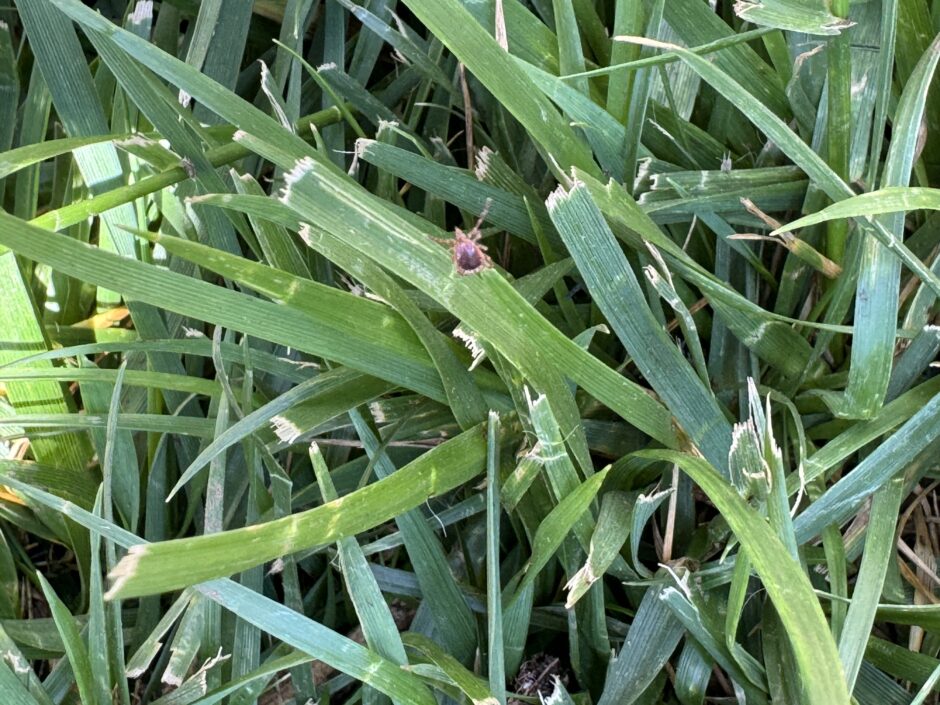
Every tick I’ve ever found attached to me came after one of those quick trips into the garden. Not after spending an entire day planting. Not after hiking through the woods. It was always the quick run to pick a cucumber. Pull a weed by the driveway. Check on the tomatoes. The kinds of trips that don’t seem worth spraying for because, really, what could happen in five minutes?
Unfortunately, a lot.
How Ticks Changed Our Lives
One of my kids has Lyme disease. We believe it was the trigger for their PANS, a sudden, severe neuropsychiatric condition that arrived almost overnight and changed the course of our family’s life. I say “believe” because you can never completely untangle these things. Was it a tick-borne illness? Mold? A virus? We’ll probably never know with certainty, but in our case, we have strong reasons to believe it started with a tick.
Something no bigger than a poppy seed has caused an immeasurable amount of suffering.
It wasn’t just one child, either. My other kid tested positive for Babesia. Even our dog had Ehrlichia. Three different tick-borne infections under one roof.
So when I tell you I’m afraid of ticks, understand that this isn’t a squeamish, “Get it off me!” kind of fear. It’s real and it comes from experience.
For years, we tried to be good stewards of our little piece of the earth. I planted natives. I avoided pesticides. I let parts of the yard stay a little wild because that’s what the moths, bees, and fireflies need.
But eventually, I had to put my children’s health first.
I started with a cedar oil spray called Wondercide, hoping it would be enough. It wasn’t. Eventually, I resorted to conventional insecticides, a decision I never imagined I’d make.
In the end, I learned it was largely futile anyway. Our yard backs up to the woods, and every day deer wander through, carrying new ticks with them. Spraying is like bailing out a sinking boat that keeps filling back up. No matter how much you remove, more keep coming in.
I still garden, but not quite the way I used to. I walk around my own yard instead of through it, and too often I settle for admiring the garden from the safety of the patio. Ticks have a way of making you see familiar places differently. They’ve stolen some of the joy I once found outside, though not all of it. What they did leave me with was a determination to understand them better.
Here’s what actually helps with ticks:
Do a tick check every single time you come in. This is my number one and it is not negotiable. Full body, everywhere, and I mean everywhere. Get a magnifying glass and keep it in the bathroom. The nymphs are the size of a poppy seed and love to hide in the places you’d rather not check.
Shower after a long day outside or even a short time outside. Use a washcloth or a something with a little texture and scrub your whole body down. The friction can knock off the tiny ones that you miss with your visual tick check. I now plan my garden trips right before I plan to take my daily shower, so that I am showering even after the quick trips to the garden.
Treat your yard clothes and shoes with permethrin. You spray it on the fabric, let it dry, and it lasts through several washes. Treat a dedicated set of garden clothes and shoes with permethrin. Here’s a good one.
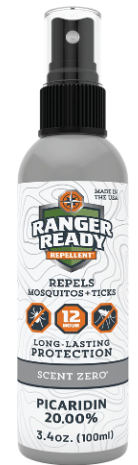
Wear real insect repellent when you’re going to be out. Do as I say, not as I do — I’m the one grabbing basil with bare ankles. But it only takes one time. And please, forget the homemade stuff and the old wives’ tales. I tried that, too, but you want something backed by research: DEET or picaridin. This tool on the EPA website let’s you find the repellent that’s right for you. Picaridin gives you the same protection as DEET without damaging certain plastics and leaving you feeling like you bathed in bug spray. There are some other EPA and CDC-backed ingredients, like oil of lemon eucaplytus, but you can’t use it on kids under 3 and you definitely can’t make your own. Here’s my favorite: Ranger Ready Picaridin 20%.
Cover up and tuck in, even though you’ll feel ridiculous. Long pants, long sleeves, pants tucked into your socks, shirt tucked into your pants. I know. You look like you’re about to go spelunking to pick basil. But the point isn’t to seal yourself in; it’s that a tick now has to crawl up the outside of all that fabric to find any skin, which gives you a much better shot at spotting it first. Light-colored clothes help here too, not because the color repels anything, but because you can actually see a poppy-seed-sized speck moving across them. Then peel it all off and run it through the dryer on high for a good while. The heat kills anything that hitched a ride, better than washing it does.

Put a barrier between you and the trees. The standard advice is a three-foot border of wood chips or gravel between your lawn and any woodline because ticks don’t like crossing the dry, sunny open space. I can’t do it. My garden would lose a third of its footprint and I’m not giving that up. But if your lot allows it, it’s one of the few things the research genuinely supports.
Don’t bother spraying the whole yard, and if you spray at all, do the perimeter only. I learned this the expensive, guilt-ridden way before discovering the research agreed with me. In a controlled study of more than 2,700 homes, spraying reduced tick numbers by more than 60%, yet people were bitten and developed tick-borne illnesses at the same rate.* The problem is simple: your yard isn’t a closed system. Deer and mice bring in new ticks faster than you can eliminate the old ones.
Clear the leaf litter along the fence line. Removing leaf litter from a forested residential area cut the number of questing nymphs by somewhere between 73% and 100% when it was done in early spring and early summer.* That damp pile of leaves where the woods meet your fence is a tick nursery. As a naturalist, every instinct tells me to leave the leaves. As someone who’s watched what tick-borne disease can do, this is one place where I make an exception.
Try tick tubes. These are cardboard tubes packed with permethrin-treated cotton. Mice take the cotton to build their nests, the treatment kills the larval ticks feeding on them, and you’re hitting the ticks at the source instead of waiting for them to find you. The research is genuinely mixed, but the logic is sound and the cost is low. Placement is everything: set them at the forest edge and along the fence and make sure the family dog can’t get to them. Put them out in late May, then again in August. Think of them as treating the mice instead of treating your entire yard.
Fence the deer out if you can. Deer are the ticks’ ride into your yard. A fence that actually keeps them out cuts down the traffic. My pie-shaped lot makes a proper fence impractical, and my deer appear to have unionized, so I’m mostly out of luck.
If you find a tick on you
Because even when you do everything right, one may still get through. Here’s what to do, in order, without panicking.
Get it out properly, and now. Don’t wait, don’t go looking for a doctor’s appointment first, the longer it’s attached, the higher the risk. Use fine-tipped tweezers (the pointy kind, not the slanted drugstore ones) or an actual tick-removal tool. Grab it as close to your skin as you possibly can, right at the head, and pull straight up with slow, steady pressure. Do not twist. Do not jerk. Twisting is what snaps the head off and leaves the mouthparts in you. If a little bit does break off and you can’t easily get it with the tweezers, leave it alone and let your skin push it out — digging around does more harm. Clean the bite and your hands when you’re done.
Don’t do the folklore stuff. No nail polish, no Vaseline, no essential oils, no burning it with a match. All of that just agitates the tick and makes it more likely to regurgitate whatever it’s carrying into you before it lets go. Use tweezers and pull straight up.
Save it. Take a photo of it and then drop the tick in a small ziplock bag, alive or dead, whole or in pieces. You can have it tested to find out what, if anything, it was carrying. TickReport (run out of UMass Amherst) is the national go-to: you mail the tick in, and a basic pathogen panel runs around $50, more if you want the full screen for viruses, with results in a couple of days. Before you pay, though, check your own state and county as some run free or subsidized testing programs, and it’s worth a two-minute search to find out. Also, know that the free testing is probably way less thorough than what you can get at TickReport.com and tests for much fewer things. For me, that money is worth the peace of mind.
Testing the tick tells you what the tick had, not what you caught. A positive result doesn’t mean you’re infected, and a negative one doesn’t mean you’re in the clear — you could’ve been bitten by another one you never found. It’s information, not a diagnosis.
Call your doctor. Tell them you were bitten, how long it was attached if you know, and what the tick turns out to be if you had it tested. Not all doctors hand out antibiotics for every tick bite, and you shouldn’t expect a prescription just for asking, but for certain higher-risk bites there’s a specific preventive option, and that’s a real conversation to have with someone who knows your history. Watch yourself for the weeks after: a rash, a fever, body aches that come out of nowhere. If any of that shows up, you go back, and you remind them about the tick. However, the absence of any of that, doesn’t mean disease transmission didn’t happen.
Find a good doctor
One thing I learned through all of this is that the doctor you see after a tick bite matters. There isn’t always a simple, one-size-fits-all answer, and different doctors may approach tick bites differently based on their training, experience, and how they weigh the risks.
Some physicians follow a more conservative approach: assessing the type of tick, how long it was attached, where the bite occurred, and whether there are symptoms that suggest a higher risk of infection. Others may take a more proactive approach, especially when someone has a history that makes them more concerned about tick-borne illness.
The important thing is finding a doctor who will have a thoughtful conversation with you. Someone who will listen to what happened, consider the details of the bite, explain their reasoning, and help you understand your options.
In my own family, I learned how important it is to trust your instincts when something doesn’t feel right. Tick-borne illness can be complicated, and early symptoms can be easy to miss or nonexistent. A rash or fever may happen, but not always.
I’m not a doctor, but I know what I want in one: someone who takes a tick bite seriously, looks at the whole picture, and doesn’t make me feel like I’m overreacting for asking questions.
If your concerns are brushed aside, it’s okay to seek another opinion. Look for a physician who is familiar with tick-borne illnesses and who will partner with you in making decisions about your care.
In conclusion
I’d love to tell you I figured out how to feel safe again during my morning coffee walks, but I haven’t. The truth is, ticks changed the way I move through my own yard.
So now I garden in long pants tucked into my socks, my hair pulled back, and my skin sprayed down like I’m heading into a hot zone to cut some basil. It’s not the morning ritual I used to have, but it’s the one I’ve got.
And I’m still out there.
Grow with me
See my other garden or wildlife posts.
Get new posts in your inbox by subscribing.
Follow on Instagram.
Sources
* Hinckley, A.F. et al. — CDC randomized controlled trial, published in Emerging Infectious Diseases, 2022.
** Schulze, T.L., Jordan, R.A., and Hung, R.W. (1995). “Suppression of Subadult Ixodes scapularis (Acari: Ixodidae) Following Removal of Leaf Litter.” Journal of Medical Entomology, 32(5): 730–733.

I’m so sorry about this Whitney but I admire the way you are dealing with it. I have a cat and I need to keep putting stuff on him. He once gave me a tick and I didnt even notice it till I was in the bath but I also pulled it out.
Heather, Thank you! I’m not sure about cats, but for dogs, I have found that the most effective thing are the Seresto collars, instead of the monthly topicals.
I so relate to this after testing positive for Lyme three years ago. I miss my morning garden walks too. Your family has suffered from ticks. I’m sorry you all have experienced this. Thanks for sharing.
I’m sorry about the Lyme for you, too.
I can relate to you perspective on ticks, given your family’s situation. We’ve had both Lyme and Alpha-Gal in our family. We’re diligent about tick checks and use of personal protection, but haven’t stopped our outdoor activities. I especially appreciate your conclusion that spraying our yards for ticks and mosquitoes is not effective. Indeed, sprays also kill the predator insects that help keep ticks in balance. And studies have shown that merely reducing the number of ticks does not reduce the incidence of disease. So thank you for listing the ways that personal protection can help. All the best to you and your family.