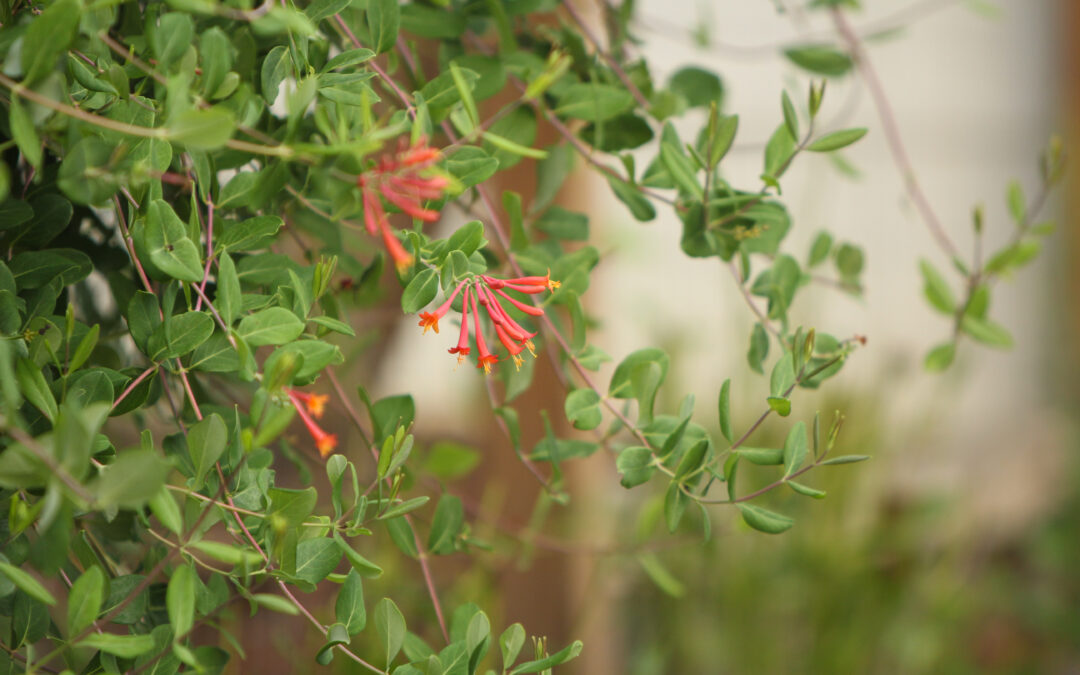
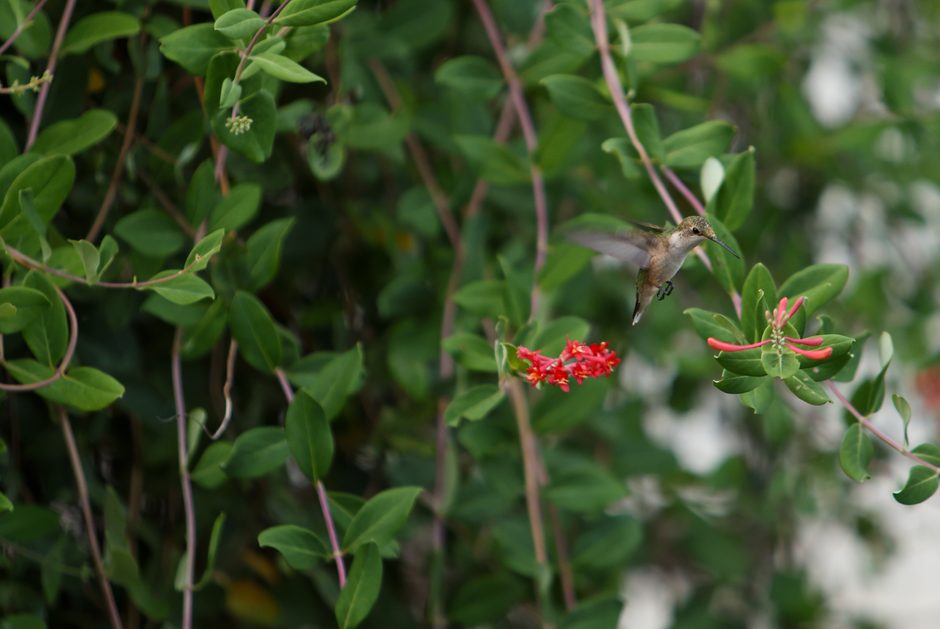
One of my favorite Virginia native plants in my garden is coral honeysuckle or Lonicera sempervirens. I planted this for one reason and one reason only: to attract hummingbirds. Ok, two reasons. I’m also trying to plant more natives generally. But that all circles back to providing wildlife habitat, so basically the same. These little winged beauties abolutely delight me and it’s great to have a huge buffet for them.
Why should you plant native plants?
Native plants support insect and animal life! Without them, local birds could not exist because their food supply largely comes from caterpillars that need native plants and trees to survive. For example, research by the entomologist Doug Tallamy has shown that native oak trees support over 500 species of caterpillars whereas ginkgos, a commonly planted landscape tree from Asia, only hosts 5 species of caterpillars. When it takes over 6,000 caterpillars to raise one brood of chickadees, that’s the difference between a yard that feeds birds and one that doesn’t. Native plants provide pollen for specialist bees and other insects that cannot digest the proteins or lock onto the unique physical shapes of non-native pollen to feed their larvae. Natives are also low maintenance and help prevent erosion. More on that in my native plants post.
Why should you plant coral honeysuckle
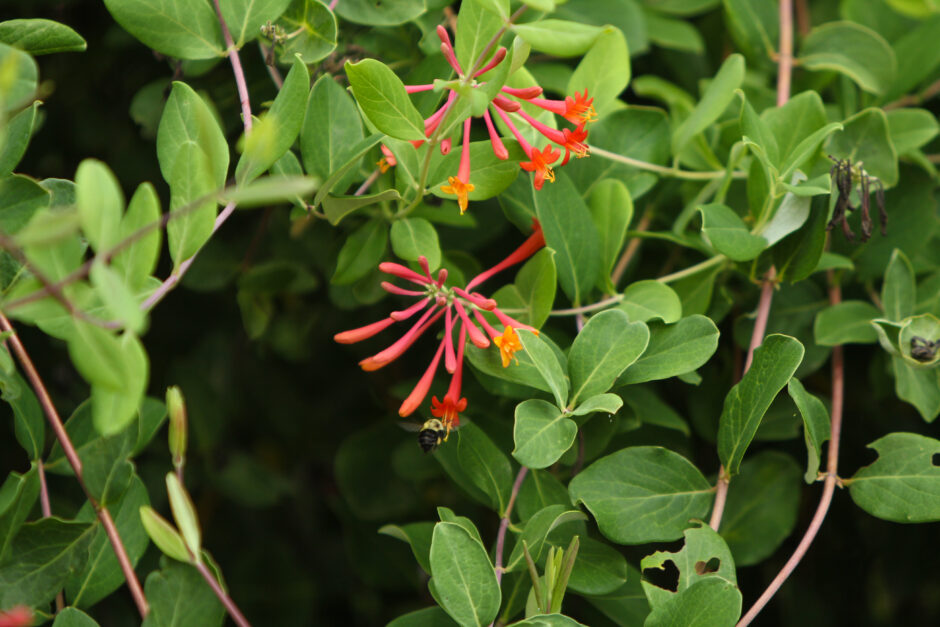
Coral honeysuckle checks a lot of boxes. It’s beautiful, it’s native, and it’s one of the best plants you can grow for hummingbirds, who feed on the tubular coral flowers all season. Bumblebees and other long-tongued bees are able to feed on the coral honeysuckle, too. It’s a larval host plant for the Spring Azure butterfly and the Snowberry Clearwing moth, so it’s feeding caterpillars as well as adults.
Something else that I love about this plant is that it blooms for 3 seasons! Mine starts flowering in April and keeps going into at least September. I try to have something blooming at all times so that my yard is not a food desert for birds and insects, so this plant is a powerhouse in that regard. [See my bloomtime chart post to help you map out having something blooming around the clock in your yard.]
Where to buy
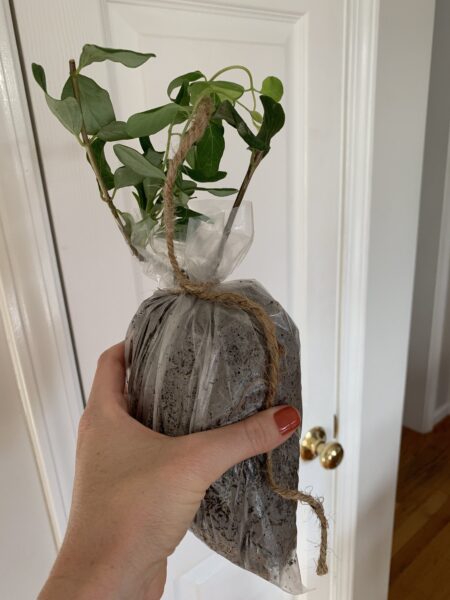
Buying native plants in southwest is hit or miss, and I couldn’t find this one locally at the time, so I ordered it from Plant More Natives and I was extremely happy with my experience with them and the quality of the plant. Since then, I have found it locally.
How to plant coral honeysuckle
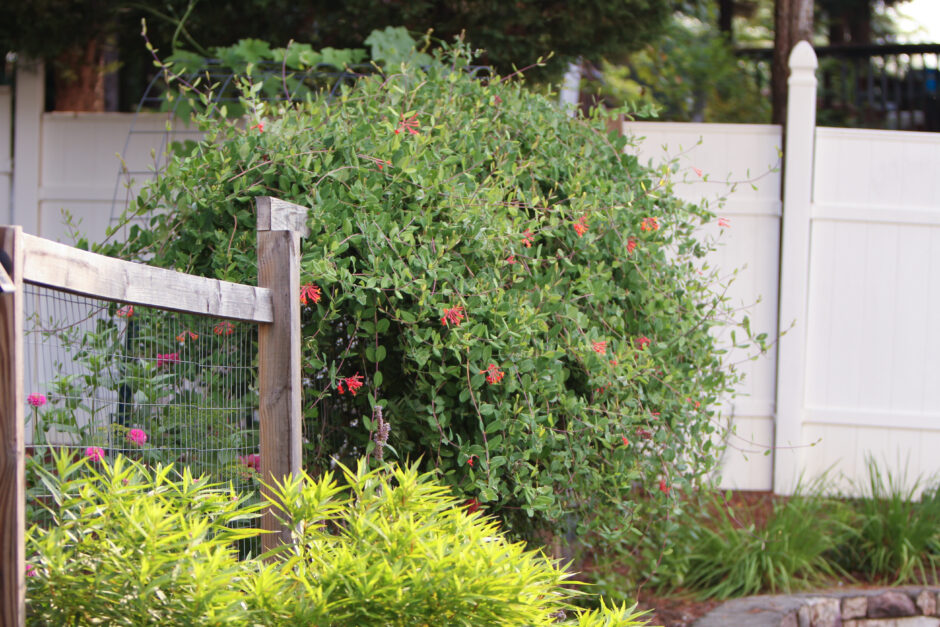
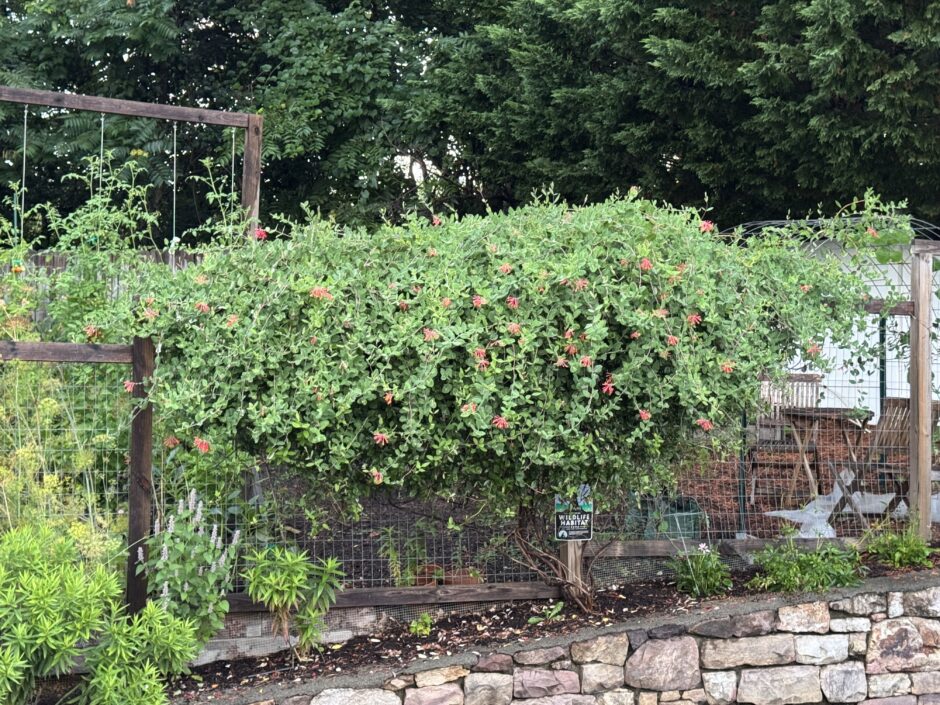
Pick your spot carefully. Coral honeysuckle wants full sun to partial sun and something to climb. Mine grows up a fence, which works well. What I didn’t plan for is that mine has turned into more of a massive shrub than a vine, which really isn’t uncommon. Now it shades out the plants behind it. If you’ve got something planted close behind your support, give it more room than you think you need or use it to provide shade.
How to care for Lonicera sempervirens
Coral honeysuckle doesn’t ask for much. It’s drought-tolerant once established and doesn’t need regular watering or fertilizer. Mine is on irrigation because it’s already there, but it would be fine without it.
Problems for Coral Honeysuckle
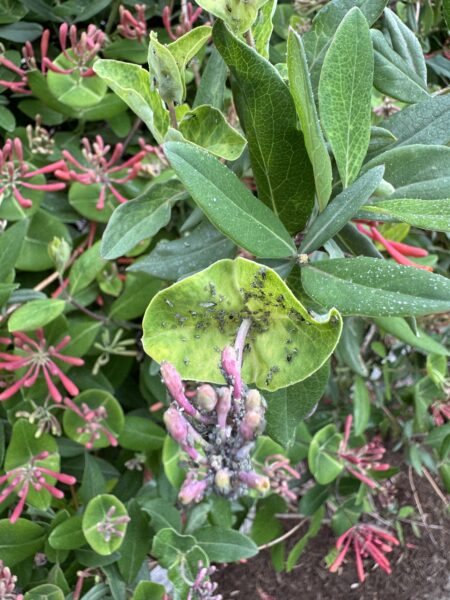
Every spring, right as mine comes into full bloom, it gets absolutely covered in aphids. Thousands of them. The blooms shrivel and die before I get much of a show. I don’t spray anything, because I don’t want to risk harming the hummingbirds or bees that use this plant. You can knock aphids back with a hard blast of water, but mine is too big at this point for that to make a dent. So I just let it ride. Ladybugs and lacewings inevitably show up to feast on the aphids without me doing a thing. The aphids fade out on their own once the weather warms up, and the plant blooms again.
In addition to not spraying anything because it’s harmful, all of the bugs provide food for the hummers as well. As much as half of a hummingbird’s diet can be small invertebrates, according to Virginia’s Department of Wildlife Resources. So the aphid infestation is doing it’s job, just like the blooms are. Win-win if you ignore the small period of unsightliness.
The growth of coral honeysuckle over the years
I want to show you what my coral honeysuckle looked like years one through five and how it grew and changed.
Year 1 – Just planted (very tiny, right under the sign)
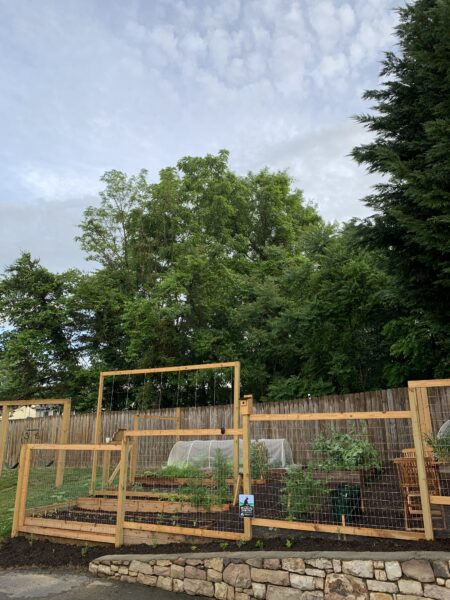
Year 2 – It’s clearly a vine now.
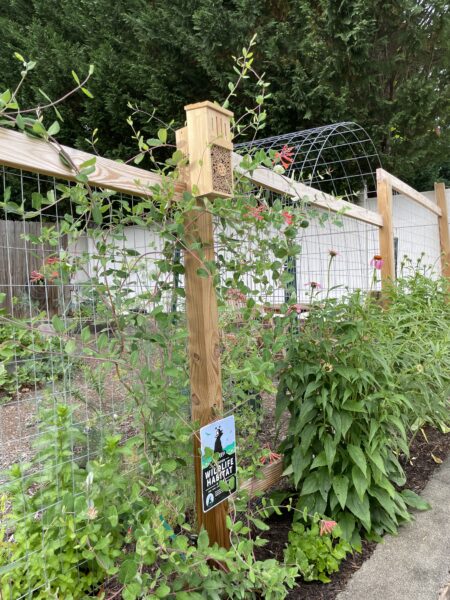
Year 3 – It filled out a lot this year. It want from a single vine to a large plant.
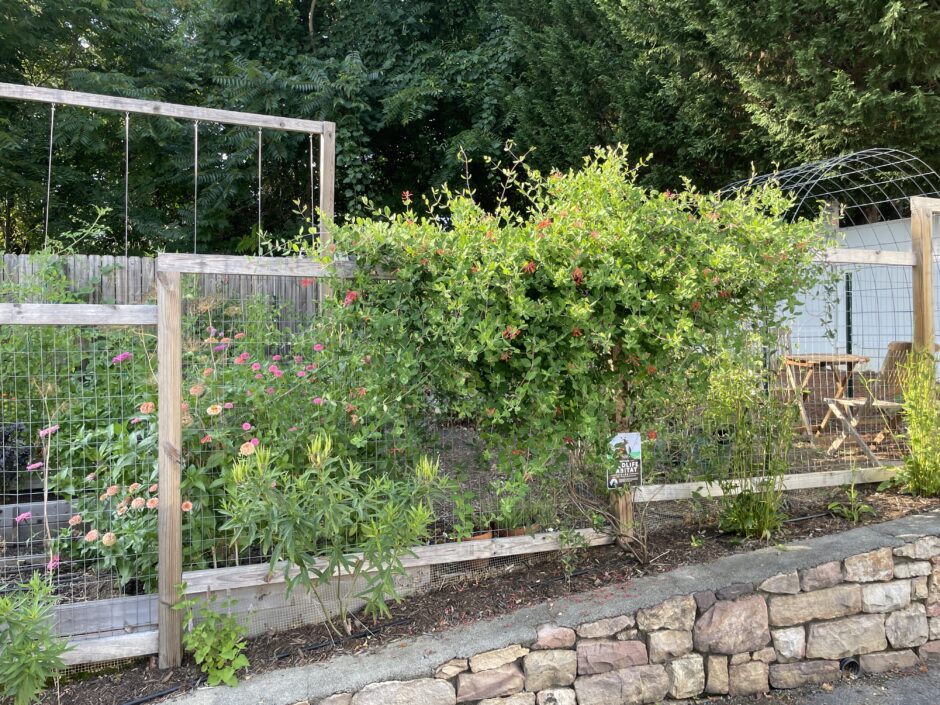
Year 4
Year 5 – notice the thick trunk.
If you decide to grow this, let me know how it goes. I love to hear from other gardeners.
Grow with me
See my other garden or wildlife posts.
Get new posts in your inbox by subscribing.
Follow on Instagram.
Great post! I also grow it in light shade and get blooms. Not as many as the ones I have in full sun, but still lovely.
The point that the spring aphid swarm doubles as food, since as much as half of a hummingbird’s diet can be small invertebrates, turns what looks like a problem into part of the plan. The five-year photo series shows really clearly how a single vine on a fence becomes a shrub with a thick trunk. Now that it’s shading out the plants behind it, are you planning to prune it back hard after a bloom flush, or leave it shrubby and move the shaded plants instead?